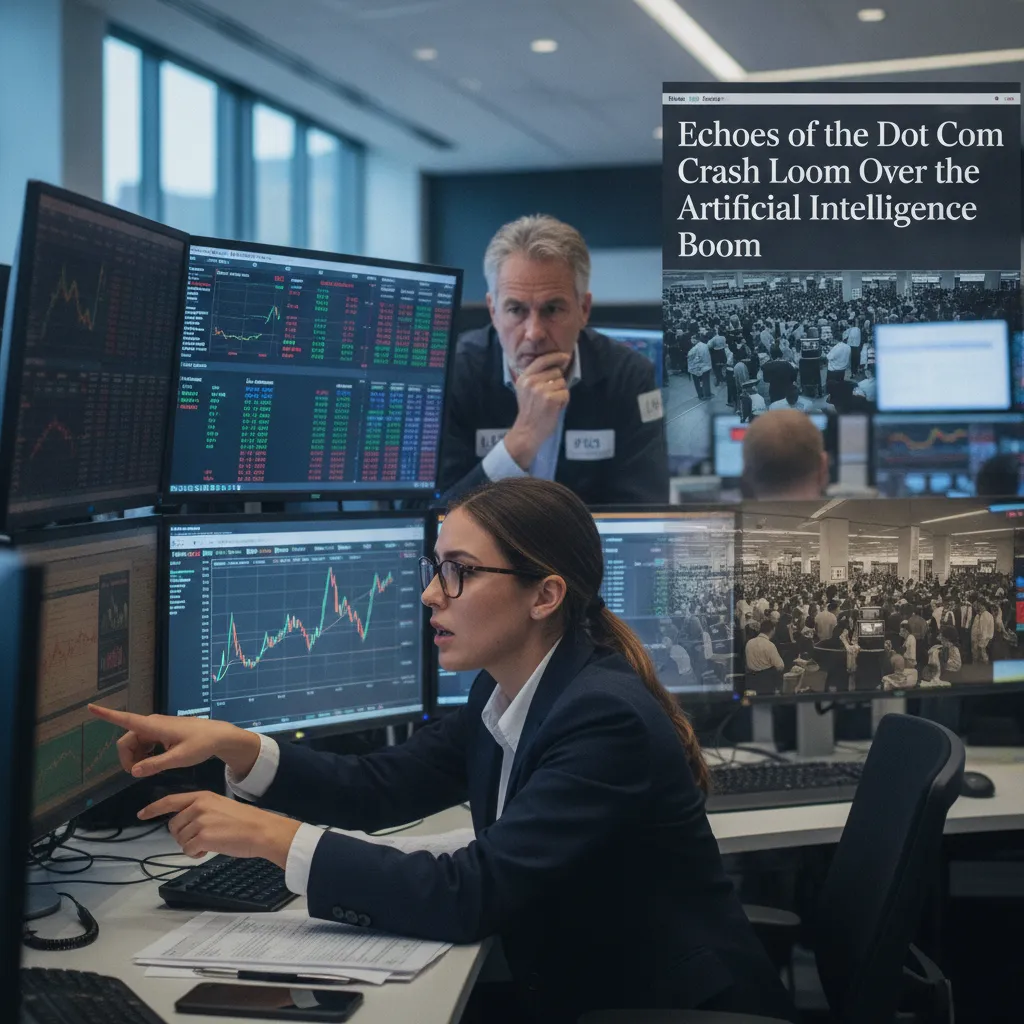
The ghost of the year 2000 is beginning to haunt modern trading floors as analysts warn that the current obsession with artificial intelligence mirrors the irrational exuberance of the dot com era. Just as the turn of the millennium saw an influx of novice investors chasing a new paradigm where traditional metrics were ignored in favor of hype, today’s market seems driven by a belief that AI will make everyone wealthy regardless of a company’s actual profitability. Back then, the world watched as businesses with no viable path to revenue soared in value before crashing spectacularly, leaving a generation of investors financially devastated.
History suggests that we are currently navigating a similar trajectory toward a significant market correction. While AI is undoubtedly groundbreaking technology with genuine potential, the gap between its practical utility and its stock valuation has grown dangerously wide. Much like the early internet boom, where even established giants were dragged down by a general mood shift once reality set in, contemporary tech leaders risk being swept away when institutional investors decide it is finally time to lock in their profits. The pattern remains consistent: excitement builds into a mania, common sense vanishes, and eventually, the bubble bursts under its own weight.
Adding fuel to this impending fire is an environment of rising interest rates and massive government borrowing, which creates a volatile backdrop for companies funding their AI ambitions through heavy debt. For those currently riding the wave of AI optimism, the lesson from two decades ago is clear: greed often blinds investors to the warning signs appearing on the horizon. Whether the crash arrives tomorrow or after several more high profile initial public offerings, the fundamental laws of economics suggest that a painful realignment is inevitable for those who mistake temporary hype for permanent growth.